
Cabinet Refinishing vs Replacement for Minnesota Kitchens
A clear comparison of cost, timeline, and outcome for Minnesota homeowners weighing their cabinet options.
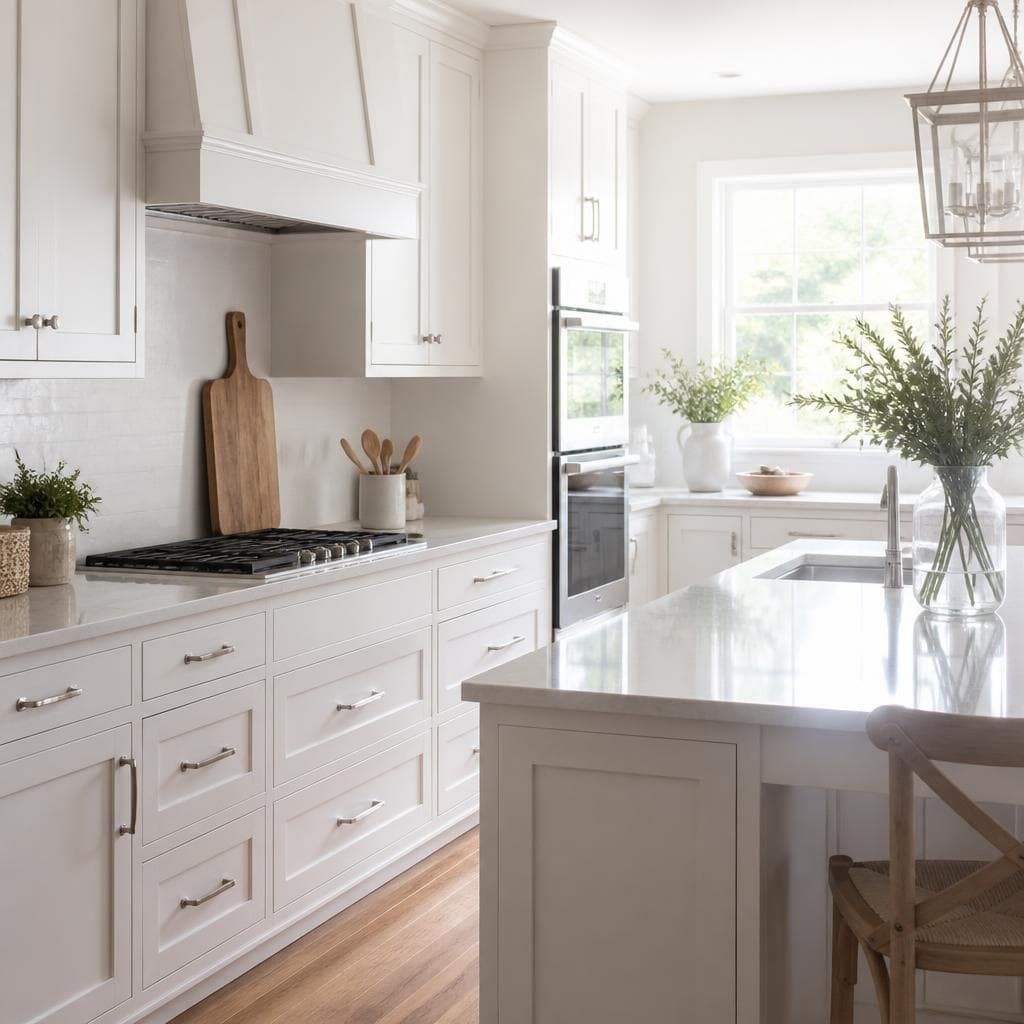
Your kitchen cabinets take more daily wear than almost any other surface in the house, and when they start looking dated or worn, most homeowners assume a full remodel is the only fix. It usually isn't. Cabinet refinishing has become one of the most requested services at Trinity Painting & Renewal because it delivers a completely refreshed kitchen without the disruption of tearing everything out and starting over.
What Refinishing Actually Involves
Cabinet refinishing uses your existing cabinet boxes and layout. Doors, drawer fronts, and hardware are removed, prepped, and refinished, either on-site or in a controlled environment, then reinstalled once the new finish has fully cured. The structure of your kitchen stays exactly the same. What changes is the surface, the color, and how the whole room feels.
Replacement, by comparison, means demolition, disposal, new cabinet boxes, new doors and hardware, installation, and very often a matching countertop swap to fit the new dimensions. It's a bigger project by every measure, and it makes sense in some situations, but it isn't the only path to a kitchen that looks new again.
Refinishing Takes Far Less Time Out of Your Kitchen
A full replacement typically keeps a kitchen out of commission for a significant stretch, especially once custom cabinet orders and installation scheduling are factored in. Refinishing is measured in working days rather than weeks, and because doors and drawer fronts are finished separately from the boxes, most homeowners can still use their kitchen in the evenings while the project is underway.
When Refinishing Is the Right Call
Refinishing tends to be the smart choice when:
- Your cabinet boxes are solid wood or good-quality plywood in sound structural condition
- The layout of your kitchen already works well for how you cook and live
- You want a genuine color change, whether that's a bright white, a deep navy, or a warm neutral, without altering the footprint
- You'd rather put the budget toward a new countertop, backsplash, or lighting instead of an entirely new cabinet system
When Replacement Is Worth Considering
Refinishing has limits, and it's worth being honest about them. It won't resolve:
- Water-damaged or particle-board boxes that are swelling, soft, or crumbling
- A layout that genuinely doesn't work for your household anymore
- Cabinets that were poorly built from the start, with thin doors, worn-out hinges, or no realistic path to soft-close hardware
If any of those describe your kitchen, that budget is better spent on replacement, done once and done right.
What a Professional Finish Actually Requires
Anyone can put a coat of paint on a cabinet door. A finish that actually holds up to daily kitchen use, grease, moisture, and constant handling, comes down to process:
- Full removal of doors, drawer fronts, and hardware, labeled and mapped for exact reinstallation
- Thorough degreasing of every surface, since kitchens accumulate cooking residue that isn't always visible
- Sanding and deglossing so the primer has something to bind to
- Filling of dings, dents, and old hardware holes before priming
- A bonding primer designed specifically for slick, factory-applied finishes
- Multiple coats of a professional-grade cabinet enamel, applied for a smooth, even result
We use Sherwin-Williams Emerald Urethane Trim Enamel on most cabinet projects. It cures to a hard, durable finish built to withstand daily kitchen use, and This Old House's guide to painting kitchen cabinets outlines many of the same preparation fundamentals we follow on every job, since skipping prep is where most cabinet refinishing projects fail.
Older Homes Need an Extra Layer of Care
If your cabinets were painted decades ago, sanding or scraping the old finish can disturb lead-based paint hidden beneath newer coats. The Environmental Protection Agency recommends working with a lead-safe certified contractor for renovation work on homes built before 1978, since certified crews follow specific containment practices designed to protect your household during prep and sanding.
Get an Honest Answer for Your Kitchen
Not every kitchen is a good candidate for refinishing, and we'll tell you plainly if yours isn't. If you're comparing options, the Better Business Bureau's guide to hiring a reliable contractor is a useful resource for vetting anyone you're considering for the work, refinishing or replacement alike.
Take a look at our portfolio to see completed cabinet projects across the region, or browse our full range of painting services to see how cabinet work fits alongside everything else we offer. If you'd like to know more about who we are before reaching out, our about page covers the story behind Trinity Painting & Renewal.
Ready to Talk Through Your Kitchen
Book a free in-home consultation and we'll give you a straightforward assessment of whether refinishing or replacement makes sense for your cabinets.
Contact Number: (763) 200-4121
Email: dustin@trinitypaintingmn.com
Ready to Talk Through Your Kitchen?
Get a free in-home consultation and an honest assessment of refinishing vs. replacement for your cabinets.