
How to Prep Your Home's Exterior Before a Repaint
The exact prep checklist we walk through on every home before a drop of paint comes off the ladder.
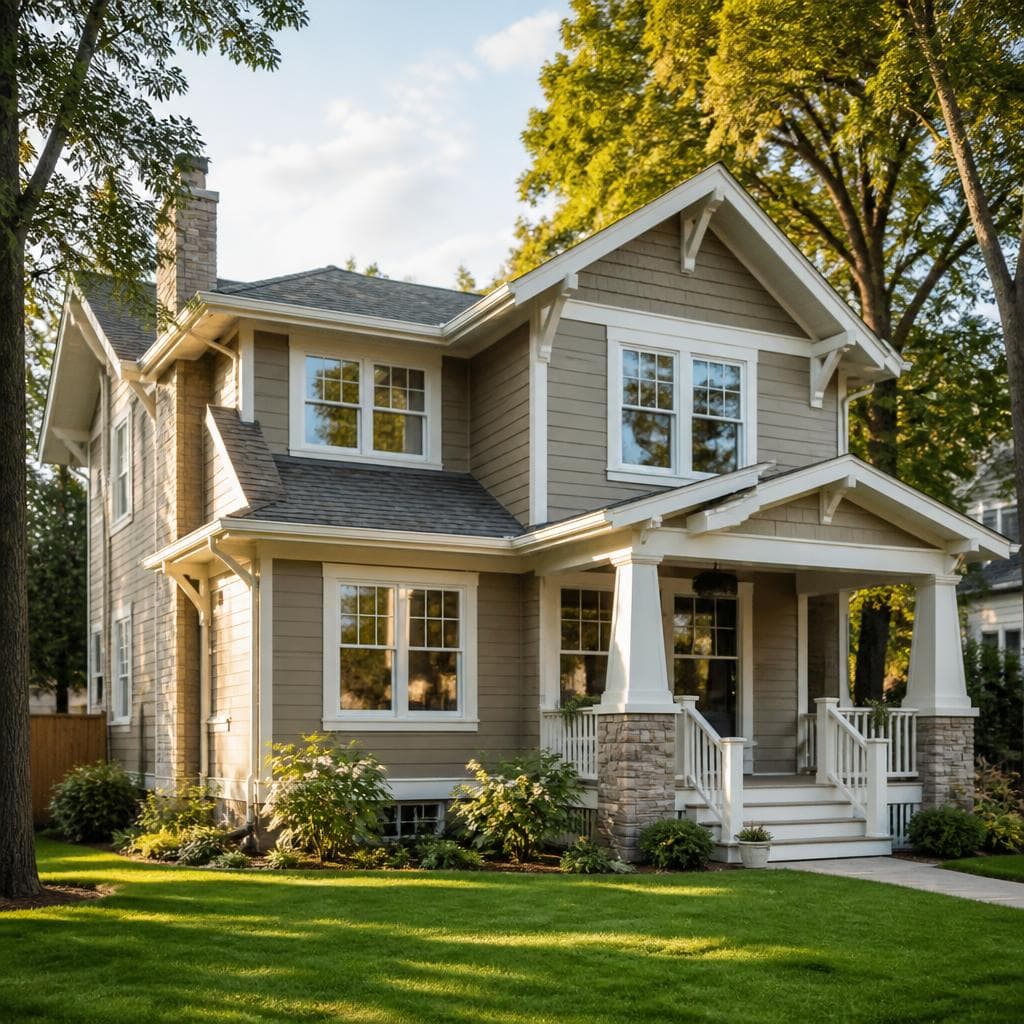
Ask any painter who's been doing this for more than a few seasons and they'll tell you the same thing: prep is most of the job. The paint on the shelf at Sherwin-Williams is remarkable, but no coating, at any price, can save a finish that gets rolled over dirty, chalky, or failing siding. Here's the exact prep checklist we walk through on every home before a drop of paint comes off the ladder.
Walk the House First
Before we quote, before we wash, before we open a can, we do a slow lap around the home and look for:
- Peeling, blistering, or cracked paint
- Chalky siding (rub your hand on it, and if it comes away white, that's failing paint)
- Cracked or missing caulk around windows, doors, and trim
- Soft, spongy wood at the bottoms of trim boards and door casings
- Nail pops, split boards, and loose fascia
- Mildew, algae, and wasp nests in shaded corners
Everything on this walk becomes a line item on the estimate. If it isn't on the scope, it isn't going to get fixed.
Wash the Entire Exterior
Paint won't bond to dirt, pollen, cobwebs, or mildew, and Minnesota siding collects all four every year.
- Soft-wash first with a mildewcide-safe cleaner on shaded elevations
- Pressure wash at a controlled PSI, high enough to remove chalk without driving water behind the siding
- Hand-scrub stubborn algae on north-facing walls
- Let the siding dry completely before touching primer
Painting over damp siding is one of the most common causes of early failure we see when we're called in to redo someone else's work.
Scrape and Sand to a Sound Edge
Every loose flake has to come off. We scrape by hand, then feather the transition with sanding so the repaired area doesn't telegraph through the new coats.
- Scrape until the remaining paint won't lift with a fingernail
- Sand transitions smooth, typically in the 80 to 120 grit range
- Vacuum and brush off dust before priming
For homes built before 1978, we follow EPA lead-safe renovation practices, which are required by federal law and non-negotiable.
Repair Before You Paint
This is the step homeowners are most often surprised by, and it's the one that determines how the house looks close-up. On a typical Minnesota repaint we'll:
- Replace rotted trim boards and window sills
- Reset popped nails and fill with exterior wood filler
- Re-secure loose fascia and soffit
- Address woodpecker damage and squirrel entry points before they get worse
If the wood underneath isn't solid, paint just delays the problem.
Caulk Every Gap That Moves
Minnesota's freeze-thaw cycle finds every unsealed seam. We caulk around windows and door casings, where trim meets siding, at vertical butt joints on lap siding, and around exterior light fixtures and hose bibs. We use a paintable elastomeric caulk rated for large joint movement, not the type that cracks by the following winter.
Spot-Prime Bare Wood
Any bare wood exposed by scraping or repairs gets primed before topcoat. Skipping this step is one of the fastest ways to see tannin bleed on cedar or early peeling on new pine.
- Oil-based primer on cedar and redwood to lock in tannins
- Bonding primer on chalky or previously glossy surfaces
- Full prime on any new wood, which also needs time to weather before it will accept primer properly
Protect Everything That Isn't Getting Painted
Prep isn't just about the siding. Before the sprayer or brush comes out, we cover landscaping, shrubs, and mulch beds, walkways and driveways, windows, light fixtures, and exterior electrical, and HVAC units, grills, and outdoor furniture. A clean job site is a sign of a careful crew.
The Difference Proper Prep Makes
A rushed exterior repaint tends to fail early, regardless of how good the paint itself is. A properly prepped exterior, coated with a quality product like Sherwin-Williams Duration or Emerald, holds its color and film integrity far longer, even through Minnesota winters. This Old House's guide to exterior paint prep and Sherwin-Williams' own application guidance both point to the same conclusion: the prep work is what separates a paint job that holds up from one that doesn't.
Minnesota's freeze-thaw swings put real stress on exterior surfaces, and the Minnesota DNR's climate data gives a sense of just how wide those temperature swings can be across the state, which is part of why proper caulking and priming matter as much here as they do.
Ready for a Repaint That Actually Lasts
If you're planning an exterior project for the upcoming season, take a look at our exterior painting services or browse our portfolio to see completed projects across the region. You can also explore our full range of services or learn more about who we are before reaching out. Minnesota's paint window is short, so it's worth getting on the schedule early.
Contact Number: (763) 200-4121
Email: dustin@trinitypaintingmn.com
Ready for a Repaint That Actually Lasts?
Get a free, detailed estimate for your exterior painting project, prep included.