
Semi-Gloss Paint for Bathrooms: What Minnesota Homeowners Need to Know
A working painter's guide to bathroom sheens, moisture protection, and the finishes that actually last in MN homes.
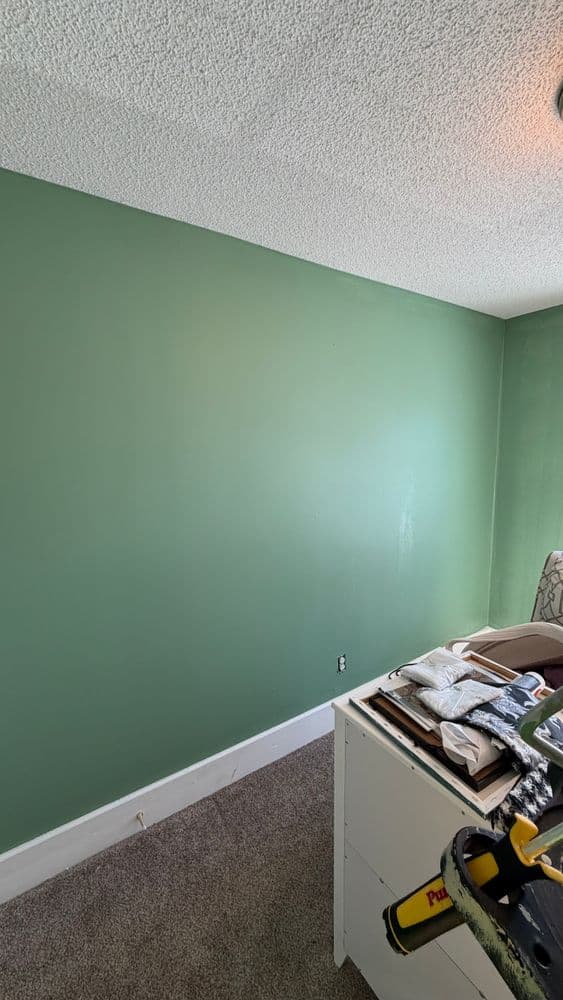
If you've been staring at paint chips at the hardware store and wondering whether semi-gloss paint for bathroom walls is the right call, you're asking the right question. Bathrooms are the toughest room in any Minnesota home — long hot showers, freezing dry winters, slamming exhaust fans, hard water splashes. The wrong sheen will fail in a year. The right one will look fresh five years from now. We paint bathrooms across East Central MN and the Twin Cities north metro every week, and the sheen choice almost always comes down to a few key factors.
This guide breaks down exactly when to use semi-gloss in a bathroom, when satin makes more sense, what brands actually hold up, and the prep mistakes we see homeowners make most often. No fluff — just what we'd tell a neighbor at the kitchen table.
Why Paint Sheen Matters in a Bathroom
Sheen isn't just about looks. It's the single biggest factor in whether your bathroom paint survives the steam, the scrubbing, and the seasonal moisture swings unique to Minnesota homes. Flat paint soaks moisture in. Glossy paint repels it. Everything in between is a trade-off.
What Humidity Does to Bathroom Walls
A typical hot shower can push bathroom humidity above 90% in a matter of minutes. In Minnesota, we get a brutal double-whammy: humid summer months when the AC barely keeps up, and winter days when the indoor air drops below 20% humidity and then spikes every time someone showers. That constant expansion and contraction stresses the paint film. A porous, low-sheen paint absorbs that moisture into the substrate, which is how you end up with bubbling, peeling, or — worst case — mildew growing right under the paint.
Semi-gloss paint, by contrast, forms a tight, almost plastic-like film that beads water and lets steam slide off. That's why semi-gloss in bathroom applications has been the contractor default for decades.
How Sheen Affects Cleaning and Durability
The other reason sheen matters: cleaning. Bathrooms get splashed with toothpaste, hairspray, hard water, and the occasional kid-related mystery. Higher-sheen paints are much easier to wipe down because the surface is smoother at a microscopic level. You can scrub a semi-gloss wall with a damp cloth and mild soap a hundred times without dulling it. Try that with a flat paint and you'll burnish a permanent shiny spot into the wall.
For families with kids, rental properties, or any bathroom that sees daily use, the washability difference alone justifies stepping up the sheen.
Semi-Gloss vs. Satin vs. Eggshell for Bathroom Walls
Here's where most homeowners get stuck — and where painters tend to disagree. The truth is that all three can work in a bathroom depending on the room's ventilation, how often it's used, and how much you care about hiding wall imperfections.
Semi-Gloss: The Go-To for Moisture Protection
Semi-gloss is our default recommendation for any bathroom with a shower or tub. It has the highest light reflection of the common interior sheens (around 35-70% on a gloss meter), the best moisture resistance, and the best scrubbability. The trade-off is that it shows every dent, divot, and patch in your drywall — so prep work has to be flawless. If your walls are smooth and properly prepped, semi-gloss is unbeatable.
Satin: The Middle Ground
Satin paint sits between eggshell and semi-gloss, with a soft, pearl-like finish. It's more forgiving on imperfect walls and looks less “showy” than semi-gloss. For powder rooms, half-baths, and bathrooms with strong ventilation, satin can absolutely hold up. We use it often in older homes where the plaster walls have decades of texture variation. The downside: it's noticeably less durable to repeated scrubbing, and it doesn't bead water as well as semi-gloss.
The satin or semi gloss for bathroom question really comes down to two things: how much moisture the room actually sees, and how perfect your wall surface is. High-use family bathroom with a shower? Semi-gloss. Guest powder room with just a sink? Satin is fine.
Eggshell and Matte: When They Work (and When They Don't)
Eggshell has a very subtle sheen — slightly more reflective than flat. In a low-moisture half-bath with a strong exhaust fan, modern eggshell paints can technically perform fine. But we rarely spec them for bathrooms. The moment a homeowner switches off the fan, takes a long shower, or hangs damp towels on the wall, eggshell starts to struggle.
Flat or matte paint? Skip it. Even the new “scrubbable” matte products that claim bathroom-grade durability tend to disappoint in real Minnesota homes once you hit a winter season of cold-wall condensation.
Quick Comparison Table
| Sheen | Moisture | Washability | Light Reflect. | Hides Flaws | Best For |
|---|---|---|---|---|---|
| Semi-Gloss | Excellent | Excellent | High | Poor | Full baths, kids' baths, trim |
| Satin | Good | Good | Medium | Medium | Powder rooms, low-use baths |
| Eggshell | Fair | Fair | Low | Good | Half-baths with great ventilation |
| Flat / Matte | Poor | Poor | Very Low | Excellent | Bedrooms, ceilings (not baths) |
Should You Use Semi-Gloss on Bathroom Walls or Just Trim?
This is one of the most common questions we get. The short answer: it depends on the room. The long answer involves thinking about each surface separately.
Walls, Ceilings, and Trim — Different Sheens for Different Surfaces
A properly painted Minnesota bathroom usually uses three different sheens across three different surfaces:
- Walls: Semi-gloss or satin, depending on use and wall condition. For full bathrooms with showers, semi-gloss wins.
- Trim, doors, and vanities: Always semi-gloss (or even high-gloss). Trim takes the most abuse, and the higher sheen makes it easier to wipe down.
- Ceiling: A dedicated bathroom ceiling paint with eggshell or satin sheen, formulated with mildewcides. Flat ceiling paint belongs in a bedroom, not over a shower.
What Professional Painters Actually Recommend
When clients ask us “what would you do in your own bathroom?” — semi-gloss on walls, semi-gloss on trim, and a satin mildew-resistant ceiling paint. We've seen too many flat-ceiling bathrooms develop dark mildew rings around the exhaust fan in 18-24 months. The marginal cost of stepping up to a real bathroom ceiling paint is maybe $15-25 a gallon — and it's worth every penny.
For cabinets and vanities, we treat them like furniture. That means proper degreasing, scuff-sanding, primer, and a hard enamel topcoat. If you're refinishing a vanity along with your walls, take a look at our cabinet refinishing service for what that process actually involves.
Best Semi-Gloss Bathroom Paints for Minnesota Homes
Not all semi-gloss paints are created equal. Cheap contractor-grade semi-gloss will look fine for six months, then start to dull and chalk. Here are the three products we actually use and trust in MN bathrooms.
Sherwin-Williams Emerald Interior
Our default spec for premium residential bathrooms. Sherwin-Williams Emerald in semi-gloss is genuinely the gold standard — anti-microbial technology built into the film, excellent stain and moisture resistance, and a self-priming formulation that bonds beautifully to properly prepped surfaces. Yes, it's expensive (around $80-95/gal). It's also the paint we'd use in our own homes.
Benjamin Moore Aura Bath & Spa
Specifically formulated for high-humidity rooms. Aura Bath & Spa is a matte/low-sheen product (Moore calls it a “spa” finish) that's engineered with mildew resistance and exceptional moisture handling. We use it in design-focused bathrooms where the homeowner wants the soft, low-sheen look without giving up bathroom-grade performance. The catch: it requires meticulous wall prep, and at roughly $85/gal, it's not the cheap option.
Behr Premium Plus
For homeowners painting their own bathrooms on a tighter budget, Behr Premium Plus in semi-gloss is genuinely solid. It's widely available at Home Depot, runs around $35-40/gal, and has a real mildew-resistant formulation. It won't outlast Emerald, but in a guest bath that gets light use, it'll hold up for 5-7 years if applied over proper primer.
A note on color: bathrooms tend to look smaller, and high-sheen paint amplifies whatever undertones are in your light. If you're going with white walls, ask for samples in at least three “whites” — a cool white, a warm white, and a true neutral — and look at them at 7am and 7pm. We've had clients pick a perfect-looking white that turned mint green under their LED vanity bulbs.
How to Paint a Bathroom with Semi-Gloss (Pro Tips)
If you're tackling this yourself, here's what makes the difference between a finish that looks pro and one that obviously doesn't.
Surface Prep Is Everything
Semi-gloss is unforgiving. Any divot, fingerprint, dust speck, or hair on the wall will telegraph through the finish like a spotlight. Before you open a paint can: wash the walls with a mild TSP substitute (bathrooms get more grease and grime than people realize), patch every nail hole, sand patches smooth with a 220-grit sanding sponge, then wipe everything down with a damp microfiber cloth. Skip this step and you'll see every shortcut once the paint dries.
Priming Matters More in Bathrooms
Always prime bare drywall, patched areas, and any wall where you're going from a darker to a lighter color. In bathrooms, we typically use a stain-blocking primer (Zinsser BIN or Sherwin-Williams Extreme Block) because old water stains, soap scum residue, and even nicotine from older homes can bleed through topcoats. Pro tip: tint your primer toward your finish color — it cuts a coat off the topcoat job.
Application Technique for a Smooth Semi-Gloss Finish
Three things that separate a pro finish from a DIY one:
- Cut in with a brush first, then roll immediately. Semi-gloss dries fast and the edge of your brush-cut will leave a visible “halo” if you let it set before rolling. Work in 4-foot sections so the wet edges blend.
- Use a 3/8" microfiber roller cover — not a foam roller, not a 1/2" nap. Microfiber lays semi-gloss down with the least stippling and the smoothest film.
- Two coats. Always. One coat of semi-gloss will look streaky in raking light. Always plan on two thin coats, and let the first one dry the full recoat window before the second.
Dry Time and Ventilation in Minnesota's Climate
Here's a Minnesota-specific tip a lot of homeowners get wrong: paint cures slower in cold, dry winter air than it does in summer. Open a window if you can, run the bathroom exhaust fan during and after application, and — this is the big one — give semi-gloss a full 30 days to cure before you scrub it. The paint feels dry in 2-4 hours, but it's not fully hardened for weeks. Wiping it too soon will leave permanent burnish marks.
Common Mistakes Homeowners Make with Bathroom Paint
Skipping the Exhaust Fan Test
Before you paint, test your bathroom fan. Tape a single sheet of toilet paper to the fan grille — it should hold up against the suction. If it falls, your fan isn't pulling enough air, and no paint will save the room from moisture damage. We see a lot of older homes in Cambridge, Princeton, and Mora where the original 1980s-era fans have basically given up. Replacing the fan first is the single best thing you can do for a bathroom paint job.
Choosing the Wrong White
Whites read differently under different light. A “soft white” with warm undertones can look outright yellow under the cool LED vanity bulbs most newer Minnesota bathrooms have. Always — always — sample three or four whites on the actual wall, in the actual lighting, before committing.
Not Allowing Enough Cure Time
We covered this above, but it bears repeating: a bathroom painted on Saturday and used hard on Sunday morning will not look the same in six months as one given a week of gentle use. If you have a second bathroom, use that one for showers for the first week after painting. Your future self will thank you.
When to Hire a Professional Painter for Your Bathroom
Honestly, a small powder room with smooth walls and a single color is a reasonable weekend DIY project. Where it gets tricky:
- Plaster walls in older homes with cracks, texture variation, or previous failed paint jobs.
- Bathrooms with existing mildew or water damage that needs to be remediated, not just painted over.
- Cabinets, vanities, and built-ins that need a furniture-grade finish.
- Bathrooms with high ceilings, tile transitions, or detailed trim that need careful cut-in work.
Trinity Painting & Renewal handles bathroom painting projects across East Central MN and the Twin Cities north metro — Mora, Cambridge, Princeton, Forest Lake, Blaine, Elk River, and everywhere in between. Whether you want a complete bathroom refresh or just want the trim and ceiling redone, our team handles the full prep, primer, and finish process. Take a look at our interior painting service for what a full project looks like start to finish.
Frequently Asked Questions
Is semi-gloss or satin better for bathroom walls?
For most full bathrooms with showers, semi-gloss is the better choice — it's more moisture-resistant, scrubs better, and lasts longer. Satin works well for powder rooms, half-baths, and any bathroom with strong ventilation and lower moisture exposure. The trade-off is that satin hides wall imperfections better.
Can you use flat paint in a bathroom?
We don't recommend it. Even modern “scrubbable” flat paints struggle in real-world bathroom conditions, especially in Minnesota where cold exterior walls create condensation in winter. The one exception is a dedicated bathroom ceiling paint with mildewcide built in — and even those are typically eggshell or satin, not true flat.
How many coats of semi-gloss do bathroom walls need?
Always two coats. One coat of semi-gloss will look streaky in raking light, even with a premium paint like Emerald or Aura. If you're going over a dark color or bare drywall, plan on primer plus two finish coats — three coats total.
Does semi-gloss paint prevent mold?
Semi-gloss makes mold growth much less likely because moisture beads on the surface rather than absorbing into the substrate. But paint alone won't prevent mold if you have a ventilation problem or an active leak. Premium bathroom paints (Emerald, Aura Bath & Spa, Behr Premium Plus) include mildewcide additives that further inhibit growth, but they're not a substitute for a working exhaust fan.
What sheen should I use on a bathroom ceiling?
Use a dedicated bathroom ceiling paint in eggshell or satin sheen, formulated with mildewcide. Avoid true flat ceiling paint — it absorbs steam and develops mildew rings around exhaust fans within a couple of years. Sherwin-Williams and Benjamin Moore both make bathroom-specific ceiling paints; they're worth the small upcharge.
Want a Pro Finish Without the Weekend Project?
Trinity Painting & Renewal serves East Central MN and the Twin Cities north metro. Get a free, detailed estimate for your bathroom — walls, trim, ceiling, or cabinetry.