
Why Painting a Minnesota Lake Cabin Differs From a House
Humidity off the water, seasonal occupancy, and older wood all change what a cabin repaint requires.
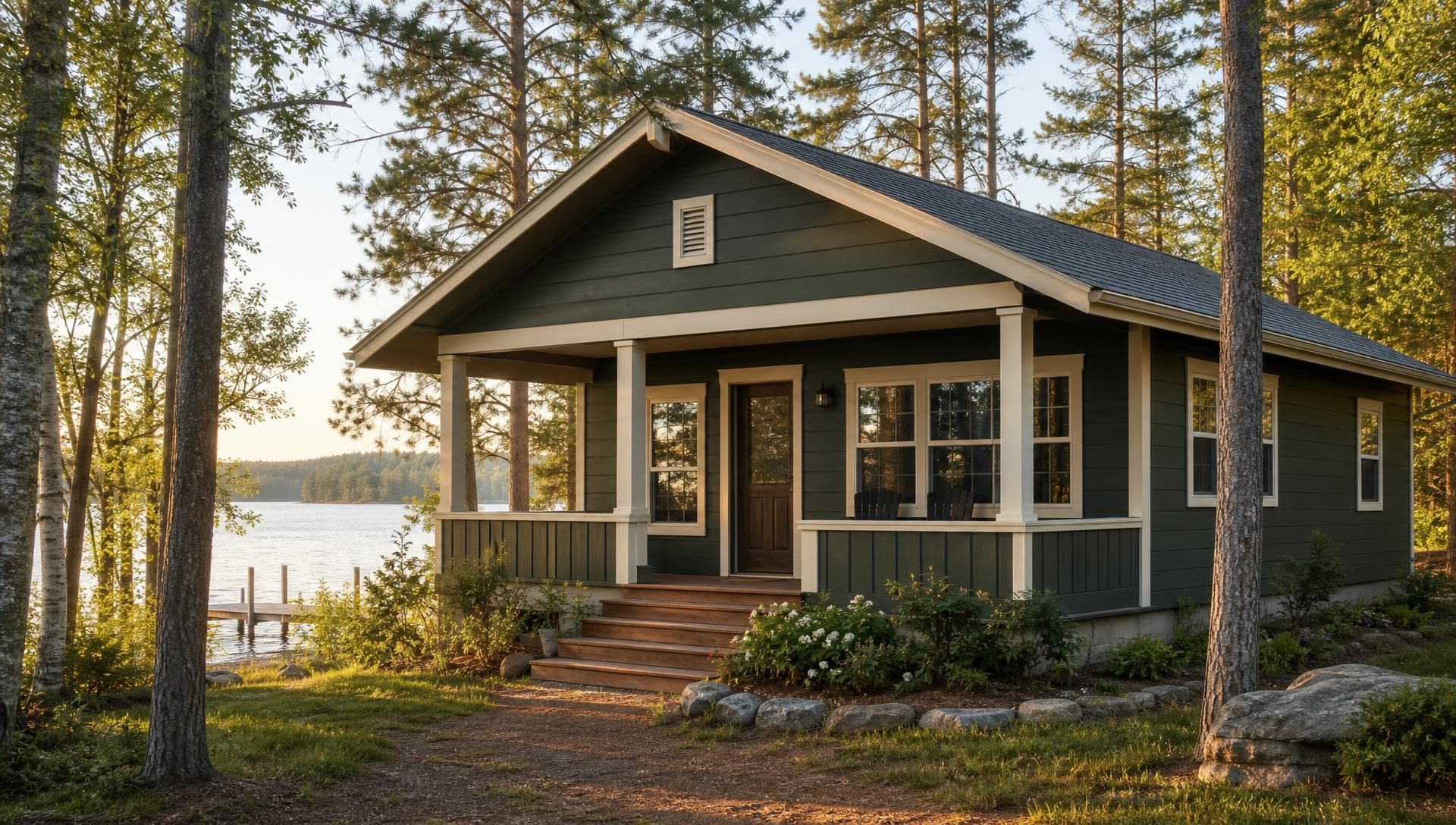
Homeowners around Mora, Pine City, Chisago County, and Lindstrom often assume repainting a lake cabin works the same way as repainting a house in a standard subdivision. It doesn't. Cabins sit in a different environment altogether, and that environment changes how paint performs, how long prep takes, and what products actually hold up over time.
At Trinity Painting & Renewal, we work on both sides of our service area, the HOA-governed suburbs closer to the Twin Cities and the lakes and rural belt further out. The two require genuinely different approaches, and cabins in particular have a few characteristics worth understanding before you plan a repaint.
Seasonal Occupancy Changes How a Cabin Ages
A house that's lived in year-round gets regular airflow, consistent heating, and someone around to notice small problems before they grow. A cabin that sits closed up for weeks or months at a time doesn't get any of that. Moisture that would normally dry out with regular ventilation can linger instead, and small paint failures that a homeowner would catch early in a primary residence can go unnoticed on a cabin until they've spread.
This doesn't mean a cabin needs constant attention. It means that when we do assess one, we're looking at it differently than we would a home someone lives in every day.
Humidity Off the Water Is a Real Factor
Proximity to open water raises ambient humidity right at the surface being painted, which affects both how paint cures and how long it lasts. Wood siding near a lake absorbs and releases moisture more than the same siding would set back from the water, and that constant expansion and contraction puts more stress on a paint film than a typical suburban exterior ever experiences.
This is one of the reasons product selection matters even more on a cabin than on a standard home. Paint that performs fine on a subdivision house a few miles inland can fail faster in a lakeside setting simply because of what it's up against.
Older Wood Siding and Log Construction Need Different Prep
Many cabins in this part of Minnesota were built decades ago with wood siding or true log construction, not the engineered materials common in newer suburban builds. Older wood siding and log surfaces need different surface preparation than vinyl or fiber-cement siding. That can mean:
- More extensive scraping and sanding to reach sound wood underneath weathered layers
- Careful attention to caulking and joints where log ends and seams are more exposed to moisture
- Products specifically suited to wood and log surfaces rather than general-purpose exterior paint
- A longer prep timeline overall, since rushing surface prep on older wood tends to show up as early paint failure
Skipping or rushing this stage is one of the most common reasons a cabin repaint doesn't hold up as long as it should.
UV Exposure on South and West-Facing Lake Views
Cabins with an open view of the water are often oriented to face south or west, toward the lake and the best light. That same orientation means those walls take direct sun for a large part of the day, especially through Minnesota's long summer daylight hours. Paint on those faces fades and breaks down faster than paint on shaded or north-facing walls of the exact same cabin, which is why some owners notice uneven fading across a single structure over time.
Choosing Products Built for the Conditions
Given everything a cabin exterior is up against, product choice matters more here than almost anywhere else. We use Sherwin-Williams exclusively across every project, including their lines formulated specifically for wood and log exteriors, because general-purpose paint simply isn't built for the combination of humidity, UV exposure, and seasonal neglect a lake cabin experiences.
Moisture management matters just as much as the paint itself. The EPA's guidance on moisture and mold prevention is a useful reference for cabin owners dealing with a structure that sits closed up for stretches at a time, since trapped moisture behind siding can cause problems long before they're visible on the surface.
What to Check Before the Season Opens
If you're planning to repaint a cabin, a walk-around before opening for the season is worth doing every year, not just before a repaint. The This Old House maintenance guides cover general seasonal exterior checks that apply just as well to a cabin as to a house, and they're a good starting point if you want to catch small issues before they turn into a full repaint. For a broader look at Minnesota's specific climate patterns across the lakes region, the Minnesota Department of Natural Resources publishes regional climate information that helps explain why lake-adjacent structures weather differently than homes further inland.
A Repaint That Accounts for Where Your Cabin Sits
A cabin repaint done right accounts for its orientation, its construction, and the fact that nobody's watching it every day between visits. Take a look at our exterior painting services or browse our portfolio to see completed projects across the region, including work in the lakes and rural areas outside the metro. You can also explore our full range of services or learn more about who we are before reaching out.
Contact Number: (763) 200-4121
Email: dustin@trinitypaintingmn.com
Planning a Cabin Repaint This Season?
Get a free, detailed estimate for your lake cabin exterior, prep and product selection included.