
Popcorn Ceilings in Minnesota Homes — Paint, Remove, or Skim Coat?
The right fix depends on the age of your house more than the look of the ceiling — here's how to tell which one is yours.
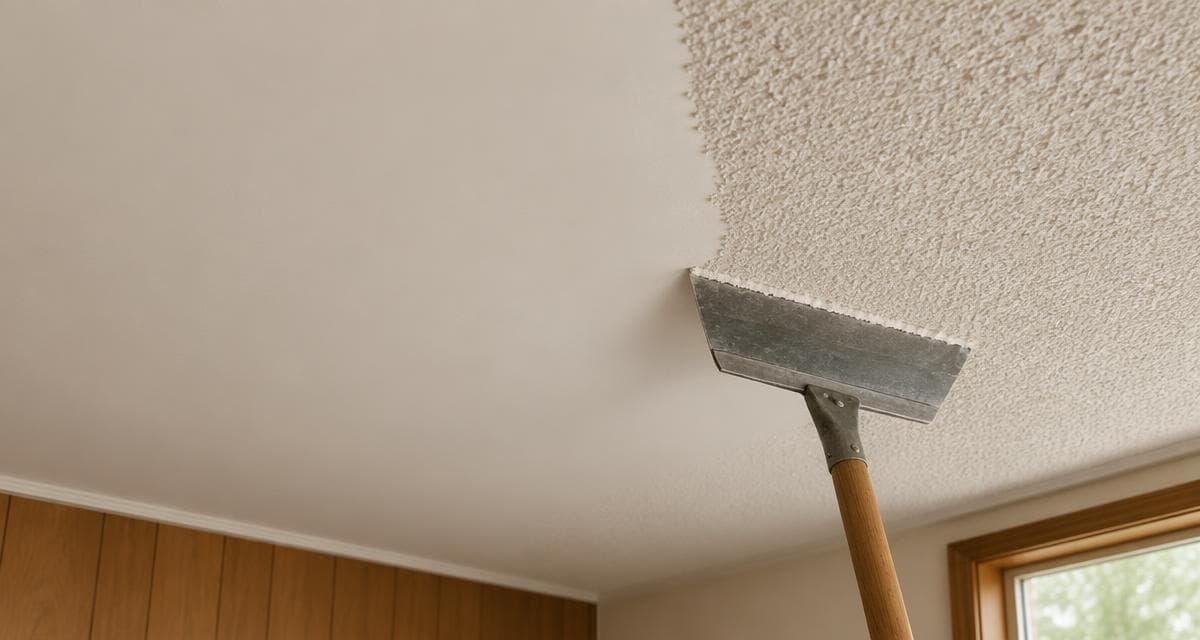
If your Minnesota home went up between the 1960s and the 1990s, there is a good chance you are looking up at a popcorn ceiling right now. The texture was everywhere for thirty years because it was fast to spray, hid drywall seams, and deadened sound between floors. Tastes moved on. The ceilings did not. Homeowners across Cambridge, Princeton, Elk River, and North Branch are now deciding whether to paint the texture, scrape it off, or bury it under a skim coat, and the right answer depends on the age of the house more than the look of the ceiling.
Before You Decide Anything, Find Out What Is Up There
This is the part most homeowners skip, and it is the only part that is not optional.
Spray-applied ceiling texture installed before the early 1980s may contain asbestos. Older homes may also carry lead-based paint on the ceiling or the trim around it. Neither is a hazard sitting still. Both become one the moment somebody starts scraping.
The Minnesota Department of Health is clear that asbestos is only a problem when fibers are released into the air. If the material is in good condition and nobody disturbs it, leaving it alone is often the safest and least costly option. MDH also notes the only way to know whether a material contains asbestos is to have it sampled by a certified inspector and analyzed by a laboratory. You cannot tell by looking, and neither can we.
Lead is the parallel risk. As the Minnesota Department of Health points out, about 75 percent of homes built before 1978 contain some lead-based paint, and the older the home, the more likely it is present. The U.S. Environmental Protection Agency requires contractors performing renovation, repair, or painting work in pre-1978 homes to be lead-safe certified, precisely because sanding and scraping generate the dust that causes exposure.
So the sequence is simple. Test first. Decide second. A dry-scrape weekend on an untested 1972 ceiling is the single worst way to approach this.
Option One — Paint Over the Texture
Painting is the least invasive route and it suits more homes than people expect. If the texture is intact, the ceiling is structurally sound, and you have no intention of disturbing the material, a fresh coat of flat ceiling paint solves the actual complaint in most cases, which is usually discoloration rather than texture.
Popcorn ceilings yellow badly over time from cooking, woodsmoke, and years of forced-air heating. Painting brings the whole plane back to a clean uniform white and instantly brightens the room.
What to know before you commit:
- Texture is porous and thirsty, so coverage takes more material than a flat drywall ceiling.
- Spray application generally gives a better result than rolling, which can pull loose texture off the surface.
- Water stains need a stain-blocking primer first or they will bleed straight through.
- Flat finishes are standard for ceilings because they absorb light, hide imperfections, and cut glare, which is exactly what a textured surface needs.
Sherwin-Williams makes dedicated flat ceiling formulations for this, and we use their coatings exclusively on every Minnesota home we work in.
The honest caveat: painting locks the texture in. You are choosing to keep the popcorn, just a cleaner version of it.
Option Two — Remove It
Removal gives you the flat modern ceiling most homeowners actually want, and it is the option with the biggest visual payoff. It is also the messiest and the one with real conditions attached.
If testing comes back positive for asbestos, this stops being a painting decision. MDH strongly recommends using a Minnesota licensed asbestos contractor for removal, because licensed contractors use containment equipment and air monitoring that are not available to homeowners. That work happens before anyone talks about paint.
If testing is clear, removal is straightforward but disruptive. The texture is wetted down, scraped, and the drywall underneath is skimmed, sanded, primed, and painted. Expect the room to be fully out of commission and everything in it to be covered or moved out.
One thing worth knowing about older ceilings: what is under the texture is not always pristine. Scraping sometimes reveals poor seam work, nail pops, or previous repairs that were sprayed over rather than fixed, which is part of why the texture was popular in the first place.
Option Three — Skim Coat Over It
Skim coating leaves the texture in place and covers it with joint compound to build a new flat surface. It sits between the other two options and is often the smartest of the three.
It makes particular sense when:
- The material tested positive and you want a flat ceiling without disturbing what is up there.
- The existing texture is sound but you want the modern look.
- You want to avoid the dust and debris of a full scrape.
The trade-off is skill. A skim coat is only as good as the hand that floats it, and a poorly done one shows every ridge under the room's lighting far more obviously than a wall would. Ceilings are unforgiving because light rakes across them all day.
Encapsulation is also a recognized approach for asbestos-containing material. If that is the route, it should be discussed with a licensed asbestos contractor rather than assumed.
Which One Fits Your Home
A few patterns hold up across the homes we work in around East Central Minnesota:
- Pre-1980 home, untested ceiling — testing comes before every other conversation.
- Sound texture, discolored surface, no plans to sell soon — painting gets you most of the benefit for the least disruption.
- Post-1980 home, flat ceiling wanted, empty or between-tenant timing — removal is worth the mess.
- Tested positive, flat ceiling still wanted — skim coating or encapsulation, handled by the right trade.
Resale is worth weighing too. Flat ceilings read as updated to buyers, and textured ones read as dated, though a clean well-painted popcorn ceiling presents far better than a yellowed one.
Planning the Work
Ceiling work is the most disruptive interior painting you can do, because everything below it is in the blast radius. Furniture comes out or gets fully covered, and light fixtures and ceiling fans come down. Our interior painting preparation checklist covers how we stage a room, and the same containment thinking applies to lower levels, where moisture is the bigger variable. Our post on painting a Minnesota basement covers that situation.
Get a Straight Recommendation
We handle popcorn ceilings across East Central Minnesota and the Twin Cities, and our ceiling painting service covers painting, removal, and refinishing. On any pre-1980 home we will tell you plainly to test before we quote scraping, because recommending otherwise would put your family at risk and would not be honest work. If the ceiling is fine and only needs freshening, we will say that too.
Whether it turns into a single ceiling or a full interior painting project, we will give you the straight answer about what your ceiling actually needs.
Trinity Painting & Renewal
Contact Number: (763) 200-4121
Email: dustin@trinitypaintingmn.com
Address: 403 Cardinal Street, Mora, MN 55051
Serving Mora, Pine City, Cambridge, Princeton, North Branch, Elk River, and the Twin Cities metro.
Ready to Deal With That Ceiling?
Get a free, detailed estimate for your ceiling project, with no surprises along the way.