Painting Over Wallpaper vs. Removing It in Minnesota Homes
When a coat of paint over old wallpaper can work, and why taking it down usually gives you a better wall.
Plenty of Minnesota homes still have wallpaper from a previous owner, whether it's a faded floral in the dining room, a dated border in the kitchen, or several layers stacked in an older farmhouse. When it's time for a fresh color, the same question comes up almost every time. Can we just paint over it?
Sometimes you can. Most of the time, removing it first gives you a smoother, longer-lasting finish. Here's how to tell the difference, what to watch for in older homes, and how our team approaches wallpaper on interior projects across East Central Minnesota and the Twin Cities north metro.
Can You Paint Over Wallpaper?
Yes, but only when the wallpaper is smooth, firmly attached, and in good condition. If the paper is peeling, torn, bubbling, or heavily textured, paint won't fix those problems and often makes them worse. Most painting professionals and paint manufacturers recommend removing wallpaper and cleaning off the leftover adhesive before painting, a point This Old House makes in its guide to painting over wallpaper.
When Painting Over Wallpaper Can Work
There are a few situations where leaving the paper in place is the smarter call:
- The wallpaper was hung directly over unfinished drywall, so removing it could tear the drywall's paper face.
- There are many stacked layers, and taking them all down would cause more damage than it solves.
- The paper is smooth, tight to the wall at every seam, and free of rips or lifting edges.
Even in these cases, the wall still needs real prep. Loose seams get re-adhered or cut back and filled, the surface gets cleaned, and the whole wall is sealed with a primer suited for wallpaper. Oil-based primers are generally recommended here, because water-based primers can soak into the paper and loosen the paste underneath.
Why Removal Is Usually the Better Choice
Painting over wallpaper hides the pattern, but it doesn't change what's underneath. That leads to a few problems that tend to show up later:
- Seams can show through the paint, especially when light hits the wall from the side.
- Moisture from latex paint can reactivate old paste and cause bubbles.
- If the paper ever lets go, it takes your new paint with it.
- Removing painted-over wallpaper later is much harder than removing it now.
Stripping the paper gives you a clean, sound surface that accepts primer and paint the way they're designed to work. That's where a premium paint actually earns its keep.
What Happens to the Wall Once the Paper Comes Off
Taking wallpaper down is only half the job. The wall underneath is rarely ready for paint on its own. Leftover adhesive has to be washed off completely, because paint applied over paste residue can crack or fail to bond. Torn drywall paper needs to be sealed before patching, and gouges or uneven spots get filled and sanded.
On walls with heavier damage, a skim coat may be the best way to get back to a smooth surface. It's the same technique used after popcorn texture comes down, which we cover in our guide to popcorn ceilings in Minnesota homes. Once the surface is sound, it gets primed and finished like any other wall.
Older Minnesota Homes Need Extra Care
Wallpaper in older homes was often hung over earlier coats of paint, and those coats may contain lead. The Minnesota Department of Health notes that about 75 percent of homes built before 1978 contain some lead-based paint. Scraping, sanding, or scoring walls during wallpaper removal can disturb those layers and create dust.
If your home was built before 1978, the EPA recommends hiring a lead-safe certified contractor for renovation, repair, and painting work. It's worth asking any painter you're considering how they handle pre-1978 homes before work begins.
Bathrooms, Kitchens, and Hidden Moisture
Wallpaper in bathrooms and kitchens deserves a closer look. Vinyl and other moisture-resistant papers can hold humidity against the wall, so it's worth checking for staining or mold once the paper comes down. The EPA's guide to mold and moisture is clear that controlling moisture is the key to controlling mold. Any moisture issue should be found and fixed before the wall is primed and painted, or the problem will come back through the new finish.
A Simple Way to Decide
If you're on the fence, pick an out-of-the-way corner and gently peel back a small section of the paper.
- If it comes away cleanly, removal is likely the way to go.
- If it tears the wall surface or won't budge, a careful painting-over approach may be safer.
- If you see peeling, bubbling, or mold, the paper needs to come down.
- If the home was built before 1978, stop and get a professional opinion before scraping or sanding.
How Trinity Handles Wallpaper Projects
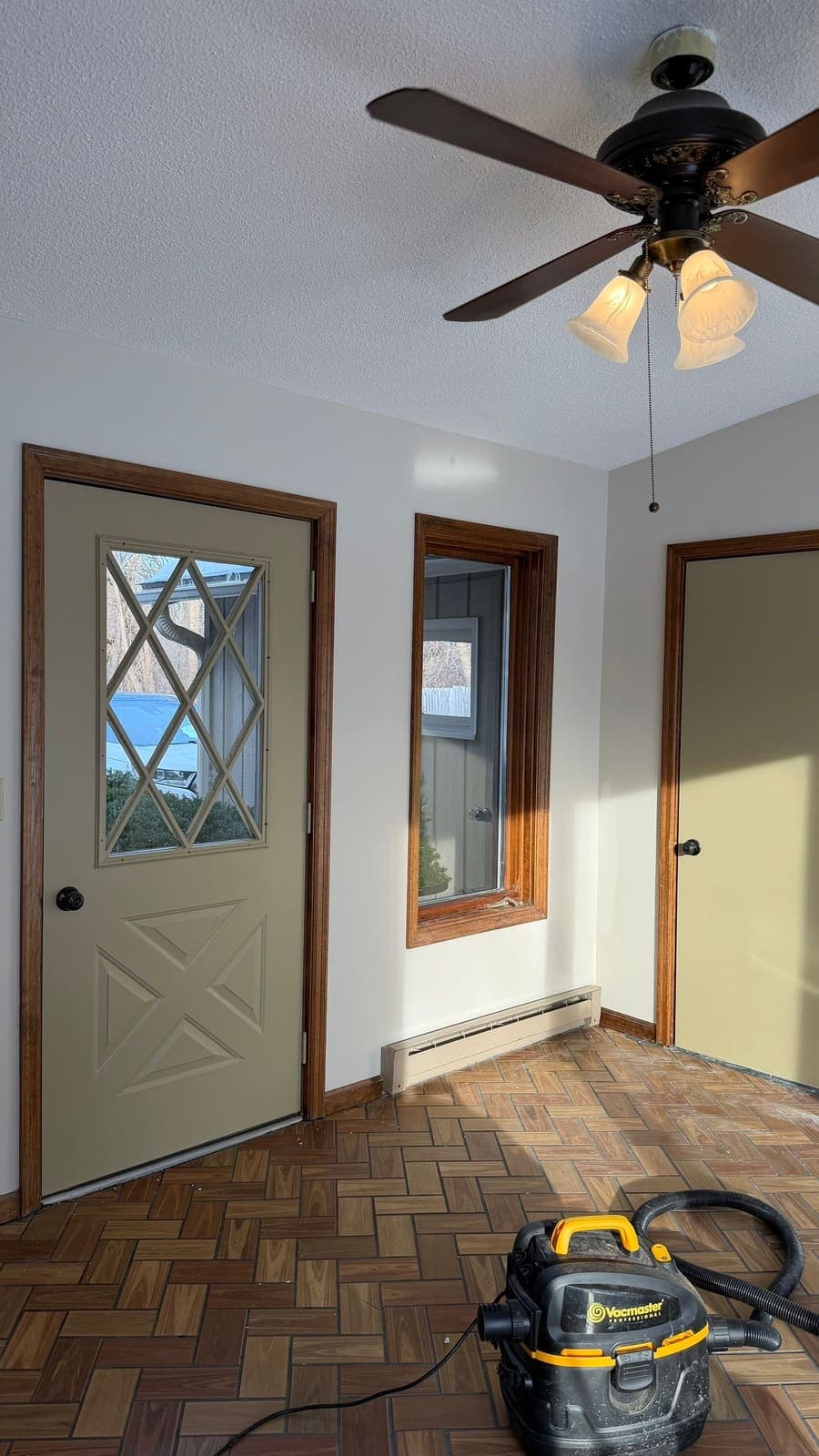
Every wallpaper project starts with a walk-through so we can see the paper, the seams, and the wall condition firsthand. On a recent Lino Lakes project, our team removed old wallpaper paste, repaired the sheetrock, and brought the walls back to a smooth finish before painting the ceilings, walls, and doors. That prep is what made the final finish look right.
We use Sherwin-Williams products exclusively and match the primer and paint to what each wall actually needs. Winter is a good season to take on interior work, and our post on painting indoors during a Minnesota winter covers what to plan for. You can also review our checklist for preparing your home for interior painting or learn more about our interior painting services.
Frequently Asked Questions
Can you paint over wallpaper without primer?
No. Wallpaper needs to be sealed with a suitable primer first. Without it, moisture from the paint can soak into the paper and loosen the adhesive.
Will wallpaper seams show through paint?
They often do, especially under side lighting. Careful prep can reduce how visible they are, but removing the paper gives the most seamless result.
Is it harder to remove wallpaper that has already been painted?
Yes. Paint makes it harder for remover to reach the adhesive, which is why taking the paper down before painting is usually the better long-term choice.
Ready to Refresh Your Walls?
Whether your wallpaper needs to come down or can be prepped and painted, we'll give you an honest recommendation after seeing the wall in person.
Trinity Painting & Renewal
Contact Number: (763) 200-4121
Email: dustin@trinitypaintingmn.com
Address: 403 Cardinal Street, Mora, MN 55051
Serving Mora, Pine City, Cambridge, Princeton, North Branch, Elk River, and the Twin Cities metro.
Have Wallpaper You Want Gone?
Get a free, detailed estimate and an honest recommendation on whether your wallpaper should come down or be prepped and painted.